
Climate Change
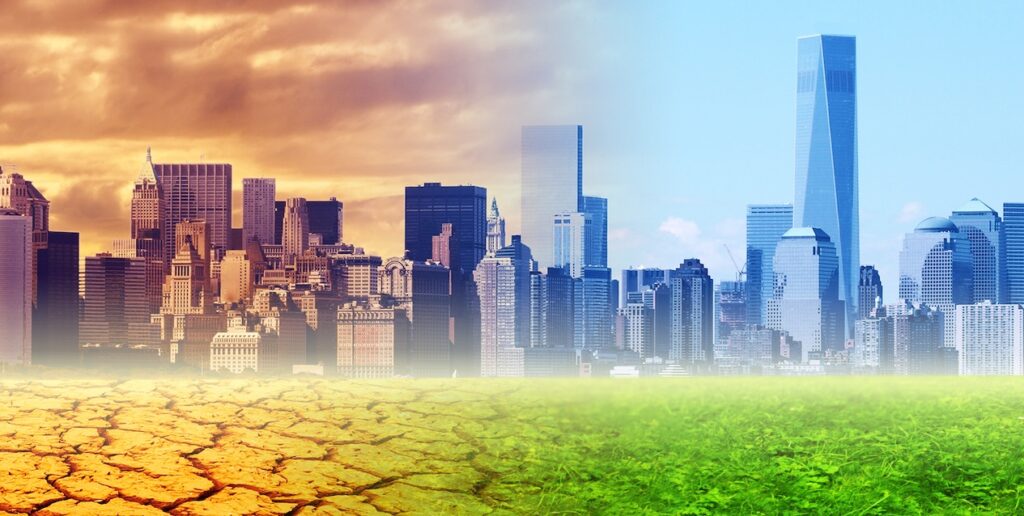
“Climate change is real. It is happening right now, it is the most urgent threat facing our entire species and we need to work collectively together and stop procrastinating.” — Leonardo Di Caprio
What is Climate Change?
Climate refers to the average weather patterns in a geographical region; therefore, climate change refers to how these patterns change over time. The Earth’s climate is believed to have changed significantly throughout its history, caused by various factors including: changes in solar luminosity, volcanic activity, and variations in the Earth’s orbit around the sun.
Climatologists now believe the world is going through another significant change in its climate that is linked to human activity, primarily the burning of fossil fuels since the Industrial Revolution. This link, often called ‘anthropogenic climate change’, has been established by a consensus of experts, with a 2021 study concluding that over 99% of scientific papers agree on the human cause of climate change.
Sadly, there remains a great deal of denial around the world to this discovery, which poses a great danger to both human civilisation and the many animal and plant species that inhabit it. The longer it takes for us to accept this relationship, and the slower we are to react, the harder it will be for us to limit the worst impacts of it, including a less peaceful world.
Climate Change and Peace
1) Heat and aggression
There have been studies conducted in several countries on the relationship between aggression and temperature. One of these studies used assault death data from Seoul, South Korea between 1991 and 2020. The results from that study showed that the overall risk of assault deaths significantly increased by 1.4% per 1°C increase in ambient temperature.
Another study from the United States (Taylor and Francis; 2011) found that average annual temperatures were positively and significantly correlated with violent crime rates such as homicide and assault, but not with nonviolent crimes. A third study from Spain in 2018 found that heatwaves were associated with an increase in intimate partner femicides.
Several explanations have been given for this link. One is that heat stress may increase irritability and aggressive behaviour by affecting cognitive processes and neurotransmitter activity in the brain. Another explanation is that when it’s warmer, especially during Summer months, people go outside more and days are longer so there are more opportunities for assaults.
It’s possible both of these factors may play a role.
2) Conflict
In terms of the probability of future conflicts, climate change can acts as a “threat multiplier”. It does this by escalating existing vulnerabilities, resource scarcity, and social tensions into violent conflict. It rarely acts as the sole cause, but rather intensifies disputes over water, arable land, and livelihoods, particularly in fragile regions. 13 of the 15 countries most vulnerable to climate change are currently struggling with conflict.
Whilst climate change is unlikely to cause international wars in the foreseeable future, it can increase the risk for intrastate conflicts, such as civil wars, communal violence, or protests. The IPCC Sixth Assessment Report concludes: “Climate hazards have affected armed conflict within countries (medium confidence), but the influence of climate is small compared to socio-economic, political, and cultural factors (high confidence).”
“I want you to act as if our house is on fire. Because it is.” — Greta Thunberg
What can we do about it?
There are many things we can do to help limit the impacts of climate change, both on an individual level and a collective level. And in doing so, we not only help to protect the environment, but we help contribute to world peace. Outlined below are some of the ways we can achieve this:
1) Reduce emissions – There have been studies conducted in several countries on the relationship between aggression and temperature. One of these studies used assault death data from Seoul, South Korea between 1991 and 2020. The results from that study showed that the overall risk of assault deaths significantly increased by 1.4% per 1°C increase in ambient temperature.
2) Plant-based diets – A plant-based diet is a diet consisting entirely of plant-based foods, which include vegetables, fruits, whole grains, legumes, nuts, seeds, herbs and spices. Plant-based diets significantly combat climate change by slashing greenhouse gas emissions, reducing land and water use, and lowering deforestation, as animal agriculture, especially beef and dairy, is a major GHG source (methane, CO2). Shifting to plant-heavy diets can cut food-related emissions by 49-70% and free up vast lands, creating opportunities for carbon sequestration, with even partial shifts (e.g., flexitarian) offering substantial benefits.
3) Reforestation – Reforestation is the practice of restoring previously existing forests and woodlands that have been destroyed or damaged. The prior forest destruction might have happened through deforestation, clearcutting or wildfires. Three important purposes of reforestation programs are for harvesting of wood, for climate change mitigation, and for ecosystem and habitat restoration purposes. One method of reforestation is to establish tree plantations, also called plantation forests. They cover about 131 million ha worldwide, which is 3% of the global forest area and 45% of the total area of planted forests.
4) Renewable energy – Renewable energy (also called green energy) is energy made from renewable natural resources that are replenished on a human timescale. The most widely used renewable energy types are solar energy, wind power, and hydropower. Bioenergy and geothermal power are also significant in some countries. Renewable energy installations can be large or small and are suited for both urban and rural areas. Renewable energy is often deployed together with further electrification. This has several benefits: electricity can move heat and vehicles efficiently and is clean at the point of consumption. Variable renewable energy sources are those that have a fluctuating nature, such as wind power and solar power. In contrast, controllable renewable energy sources include dammed hydroelectricity, bioenergy, or geothermal power.
5) Carbon dioxide removal – Carbon dioxide removal (CDR) is a process in which carbon dioxide (CO2) is removed from the atmosphere and then stored in geological, terrestrial, or ocean reservoirs, or in products. Land-based methods include afforestation, reforestation, agricultural practices that sequester carbon in soils (carbon farming), bioenergy with carbon capture and storage (BECCS), and direct air capture combined with storage. CDR methods that use oceans and other water bodies include ocean fertilization, ocean alkalinity enhancement, wetland restoration and blue carbon approaches.
6) Have few children – A controversial solution compared to the others, but an important one to consider nonetheless, is for aspiring parents to simply have fewer children. A widely cited 2017 study found that having one fewer child can save approximately 58.6 tonnes of CO2-equivalent per year, significantly more than living car-free or avoiding air travel.
———
Follow Mind Over Matter
Posts – http://luxbellator.com/mindovermatter/
Instagram – https://www.instagram.com/mindovermatterscott/
Facebook – https://facebook.com/mindovermatterscott
Reddit – https://www.reddit.com/r/MindOverMatterScott/
Leave a Reply